

How Are NDPS Cases Defended in Court? A NDPS Advocate in Chandigarh Explains
Few criminal allegations create as much fear and uncertainty as those filed under the Narcotic Drugs and Psychotropic Substances (NDPS) Act.
For most people, the moment they hear about an NDPS case, they assume the outcome is already decided. Family members panic, friends begin offering advice, and confusion quickly takes over. However, what many people do not realize is that every NDPS case must still be proven according to law.
An accusation and a conviction are not the same thing. The prosecution carries the responsibility of establishing its case through proper evidence, lawful procedures, and compliance with the strict requirements of the NDPS Act. This is where the role of an experienced NDPS Advocate in Chandigarh becomes extremely important.
Understanding the Nature of NDPS Cases
NDPS matters are different from many other criminal cases. Investigating agencies are expected to follow specific legal procedures during search, seizure, arrest, sampling, and documentation. Even seemingly minor procedural lapses can become significant issues during trial. Because the consequences of conviction may be severe, courts generally examine whether legal safeguards have been followed correctly throughout the investigation. This is why the defense in an NDPS case often focuses not only on the allegations but also on the manner in which evidence was collected and presented.
The First Step: Examining the Investigation
Before developing a defense strategy, lawyers usually begin with a detailed review of the investigation records.This often includes:
- Arrest records
- Search and seizure memos
- Witness statements
- Recovery documents
- Forensic laboratory reports
- Chain of custody records
- Case diaries and procedural paperwork
A thorough review frequently reveals important details that may affect the strength of the prosecution's case. In many situations, the outcome of a case depends as much on procedural compliance as it does on the alleged recovery itself.
Why Search and Seizure Procedures Matter?
One of the most closely examined aspects of an NDPS case is the search process. Courts often review questions such as:
- Was the search conducted legally?
- Were mandatory procedures followed?
- Were independent witnesses present where required?
- Was proper documentation prepared?
- Were the accused's legal rights respected?
Failure to follow statutory requirements can sometimes weaken the prosecution's case significantly. This is one reason why experienced defense lawyers spend considerable time analyzing search and seizure records.
The Importance of Evidence Preservation
Evidence does not simply need to be collected. It must also be preserved properly. From the moment alleged contraband is recovered, authorities must maintain records demonstrating how the evidence was handled, stored, transported, and tested. Any unexplained gaps may create questions regarding the reliability of the evidence. A skilled NDPS Advocate in Chandigarh often reviews these technical details carefully because procedural inconsistencies can become important points during trial.
Bail in NDPS Cases: Why Preparation Matters?
Many families focus immediately on securing bail after an arrest. While bail is available in certain circumstances, NDPS matters frequently involve stricter legal requirements than ordinary criminal cases.
Courts may consider:
- The quantity allegedly recovered
- The nature of the allegations
- Previous criminal history
- Available evidence
- Compliance with statutory provisions
A well-prepared bail application supported by strong legal arguments often carries greater value than hurried filings based solely on emotional grounds.
Building a Courtroom Defense
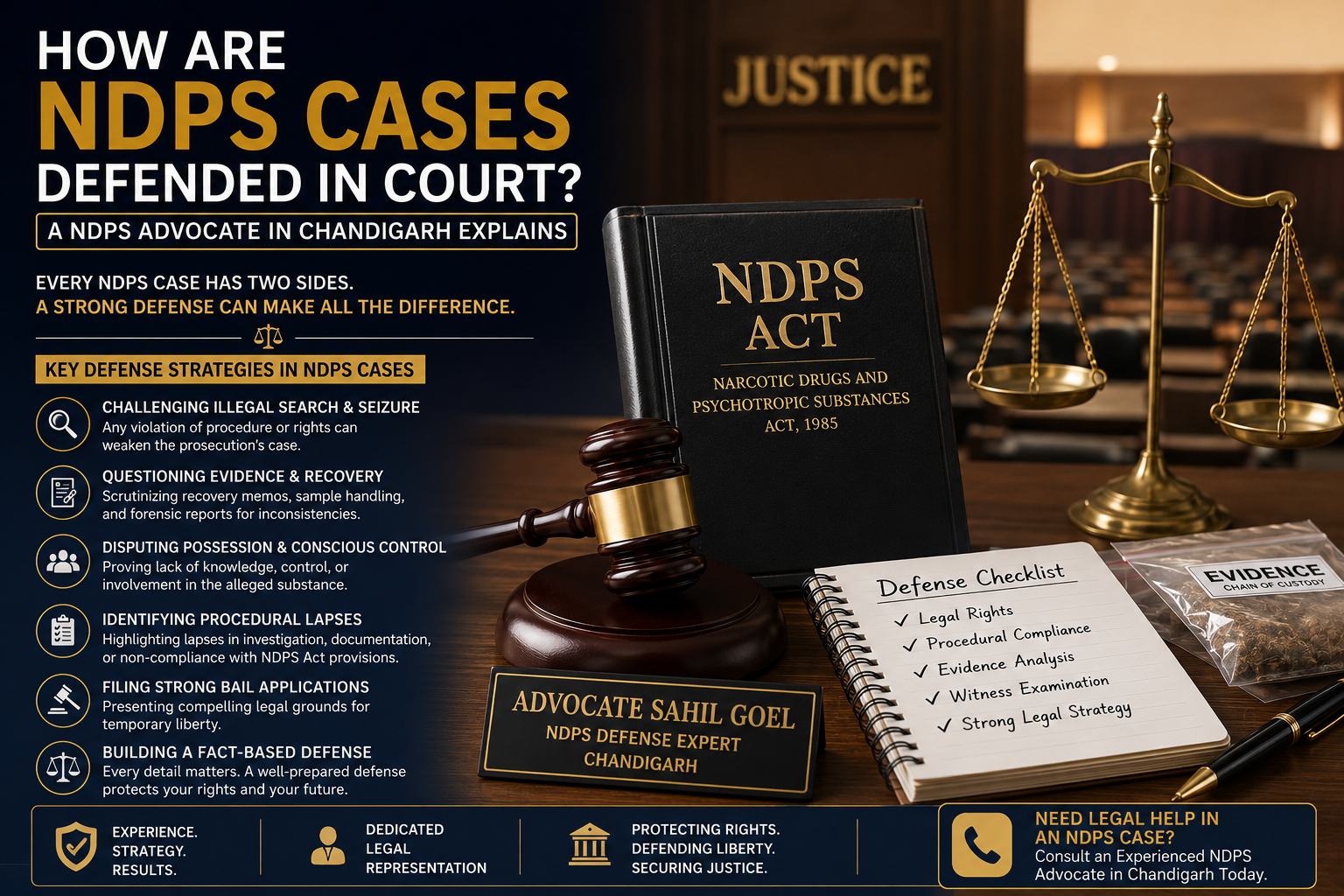
Every NDPS case has its own facts, challenges, and legal issues. However, defense strategies commonly involve examining:
Reliability of Recovery
Was the alleged recovery genuine and properly documented?
Compliance with Legal Procedures
Did investigating authorities follow mandatory provisions of the NDPS Act?
Witness Credibility
Are witness statements consistent and reliable?
Forensic Evidence
Do laboratory reports fully support the prosecution's allegations?
Procedural Irregularities
Were there procedural shortcomings that could raise questions about the credibility or admissibility of the evidence?
A strong defense usually develops through careful analysis rather than dramatic courtroom arguments.
A Situation Often Seen in Practice
Consider a scenario where an individual is stopped during a routine check and later faces allegations under the NDPS Act. At the outset, the allegations may seem clear-cut and difficult to challenge. However, after reviewing the records, the defense discovers discrepancies between official documents, inconsistencies in witness accounts, and procedural concerns regarding the handling of evidence. Suddenly, what initially seemed like a strong prosecution case requires much closer scrutiny. Cases like these demonstrate why legal strategy begins with investigation and preparation rather than assumptions.
Why Early Legal Advice Is So Important?
Many people seek legal assistance only after charges have been filed. In reality, early legal intervention can be valuable from the very beginning. Prompt legal guidance helps:
- Protect procedural rights
- Preserve relevant records
- Review investigation steps
- Prepare bail applications effectively
- Identify potential legal issues early
Delays may result in missed opportunities to address important aspects of the case.
The Role of Advocate Sahil Goel in NDPS Matters
Advocate Sahil Goel has represented clients in complex criminal and NDPS-related matters, focusing on detailed case analysis, procedural scrutiny, and strategic legal representation. His approach emphasizes understanding every aspect of the investigation before building a defense strategy. Rather than relying on assumptions, careful examination of records, compliance requirements, and evidentiary issues often forms the foundation of effective representation. Because NDPS cases frequently involve technical legal questions, meticulous preparation becomes essential at every stage.
Common Misconceptions About NDPS Cases
Several myths continue to circulate regarding NDPS litigation.
"Arrest Means Conviction"
An arrest does not determine the final outcome of a case.
"There Is No Defense Available"
Every case must be assessed individually based on facts, evidence, and legal compliance.
"Technical Issues Do Not Matter"
In criminal law, procedural safeguards exist for a reason. Courts often examine whether those safeguards have been respected.
"The Quantity Alone Decides Everything"
Quantity may be important, but it is only one factor among many that courts consider.
Final Thoughts
NDPS cases involve far more than allegations alone. They require careful examination of evidence, investigation procedures, statutory compliance, and legal safeguards. A successful defense often begins with asking the right questions, reviewing the right documents, and identifying issues that may not be obvious at first glance. Whether the matter involves bail, trial proceedings, or procedural challenges, timely legal guidance from an experienced NDPS Advocate in Chandigarh can help individuals better understand their rights and legal options. When the stakes are high, preparation, legal knowledge, and attention to detail often make the greatest difference.