

Can a Supreme Court Criminal Lawyer Challenge Investigation Errors?
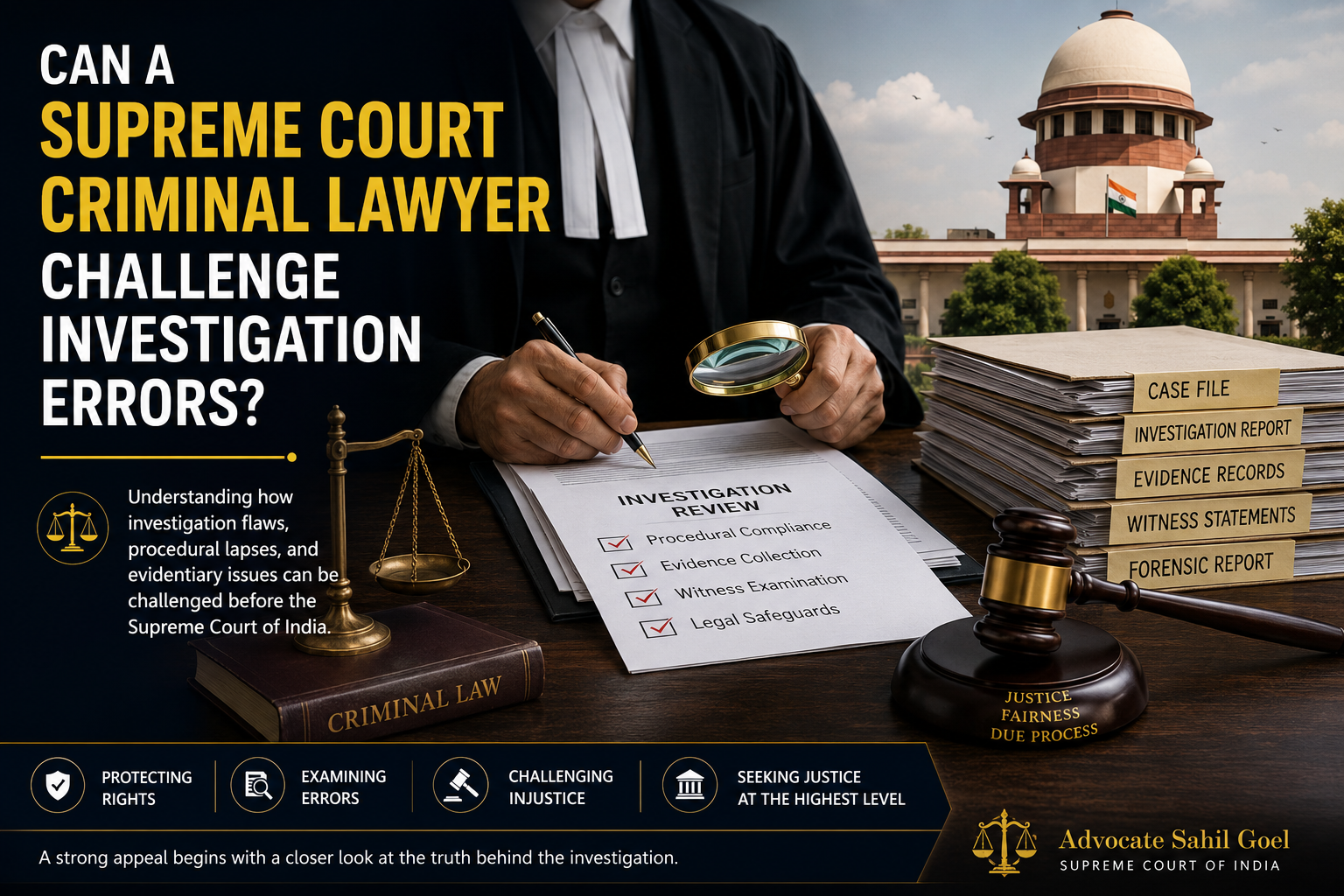
A criminal case is often judged by the evidence placed before the court. Yet an equally important question is rarely discussed: how was that evidence obtained in the first place?
Many people assume that once an investigation is completed and a court has delivered its findings, there is little room left to question the process. However, criminal litigation does not end simply because an investigation report exists. If serious concerns arise regarding the way evidence was collected, preserved, or presented, those issues may become important during appellate proceedings. This is one reason why the role of a Supreme Court Criminal Lawyer can be crucial in complex criminal matters. Higher courts often examine not only the final judgment but also whether the underlying legal process met the standards required by law.
Do Investigation Mistakes Always Help the Defense?
Not necessarily. Every procedural issue does not automatically weaken a criminal prosecution. Courts usually consider the seriousness of the mistake and whether it affected the fairness of the proceedings. For example, a minor administrative oversight may have little practical impact. On the other hand, a substantial defect involving evidence collection or legal compliance may deserve closer judicial attention.
A Supreme Court Criminal Lawyer often reviews questions such as:
- Was evidence collected lawfully?
- Search and seizure memos
- Were mandatory legal procedures followed?
- Do investigation records remain consistent throughout the case?
- Does the evidence appear reliable and properly documented?
The answers to these questions can influence the strength of an appeal.
Investigation Problems That Frequently Become Legal Issues
Reliability of Recovery
Criminal investigations operate within a legal framework. When investigators depart from mandatory procedures, courts may assess whether the resulting evidence should be given full evidentiary weight.
Gaps in Documentation
Records play a critical role in criminal litigation. Missing documents, incomplete paperwork, or unexplained omissions may raise concerns regarding the accuracy of the investigation.
Conflicting Versions of Events
Differences between witness statements, official reports, and documentary records sometimes become important areas of scrutiny. Even small inconsistencies can gain significance when they affect key aspects of the prosecution's narrative.
Issues Involving Electronic Evidence
Modern criminal cases increasingly rely on digital material. Questions regarding authenticity, certification, preservation, and handling of electronic records can become central to appellate arguments.
What Does the Supreme Court Usually Examine?
The Supreme Court generally focuses on whether legal errors had a meaningful impact on the administration of justice. Rather than looking for imperfections, the Court often evaluates whether a particular defect:
- Affected the accused person's rights
- Reduced the reliability of evidence
- Compromised procedural fairness
- Influenced the final outcome of the case
This requires a careful legal analysis rather than a simple disagreement with the judgment.
A Practical Illustration
Consider a situation where a conviction relies heavily on electronic communications presented during trial. Years later, while reviewing the case, the defense discovers that essential legal requirements governing the certification of those records were not properly satisfied. Initially, the evidence may have appeared convincing. However, once procedural concerns come to light, the court may need to consider whether the material should have been relied upon in the same manner.
In such circumstances, the challenge focuses less on the allegations themselves and more on the legal integrity of the investigative process.
Why Appeals Depend on Detailed Preparation?
Many successful appeals begin with a thorough examination of the case record. Lawyers may review:
- Trial court proceedings
- Investigation documents
- Witness testimony
- Forensic material
- Procedural records
- Relevant judicial precedents
Often, the strongest appellate arguments emerge from details that received little attention during earlier stages of litigation. A single procedural issue can sometimes alter the direction of an appeal when properly analyzed and presented.
The Importance of Early Legal Guidance
Challenges relating to investigations are often easier to identify when legal counsel becomes involved at an early stage. As discussed in our published blog, "Can a Supreme Court Criminal Lawyer Reverse a Losing Case?" , effective appellate advocacy frequently begins long before a matter reaches the highest court. Proper documentation, timely legal objections, and careful case management during earlier proceedings can create stronger opportunities for future legal challenges when necessary.
Advocate Sahil Goel and Strategic Criminal Defense
Advocate Sahil Goel has represented clients in criminal matters where detailed examination of evidence and procedural compliance formed an important part of the defense strategy. A careful review of investigation records often reveals details that may otherwise go unnoticed. By focusing on legal accuracy, documentation, and procedural safeguards, lawyers can better evaluate whether an investigation was conducted in accordance with the law. This methodical approach becomes particularly valuable when a case advances to appellate forums.
Steps to Take If You Suspect Investigation Flaws
If you believe that significant errors occurred during the investigation of a criminal matter, consider the following:
Preserve Important Records
Maintain copies of FIRs, charge sheets, orders, and other relevant documents.
Obtain Professional Legal Advice
An experienced criminal lawyer can determine whether the issues identified have legal significance.
Avoid Assumptions
Not every irregularity will affect the outcome of a case. Careful legal analysis is essential.
Be Mindful of Timelines
Appeals and legal remedies often involve strict procedural deadlines.
Final Thoughts
An imperfect investigation does not automatically invalidate a criminal case. Nevertheless, serious concerns involving evidence, procedure, or legal safeguards may justify closer judicial examination. A knowledgeable Supreme Court Criminal Lawyer evaluates whether such shortcomings had a meaningful impact on the fairness and reliability of the proceedings. When substantial legal issues are properly identified and presented, appellate review can serve as an important mechanism for protecting rights and maintaining confidence in the justice system. In criminal litigation, the outcome often depends not only on the evidence itself, but also on whether the path used to obtain that evidence complied with the law.